The challenge.
In December 2020 Michigan received an initial $660 million under the federal Emergency Rental Assistance Program. Sixty-five percent of it, roughly $429 million, had to be distributed by September 30, 2021 or the state risked losing the balance. Delivery ran through more than 80 local Housing Assessment and Resource Agencies under federal rules that changed as guidance was issued, and the usual options, a multi-year procurement or a vendor-configured platform six to nine months out, were time Michigan did not have.
What changed with Conductor.
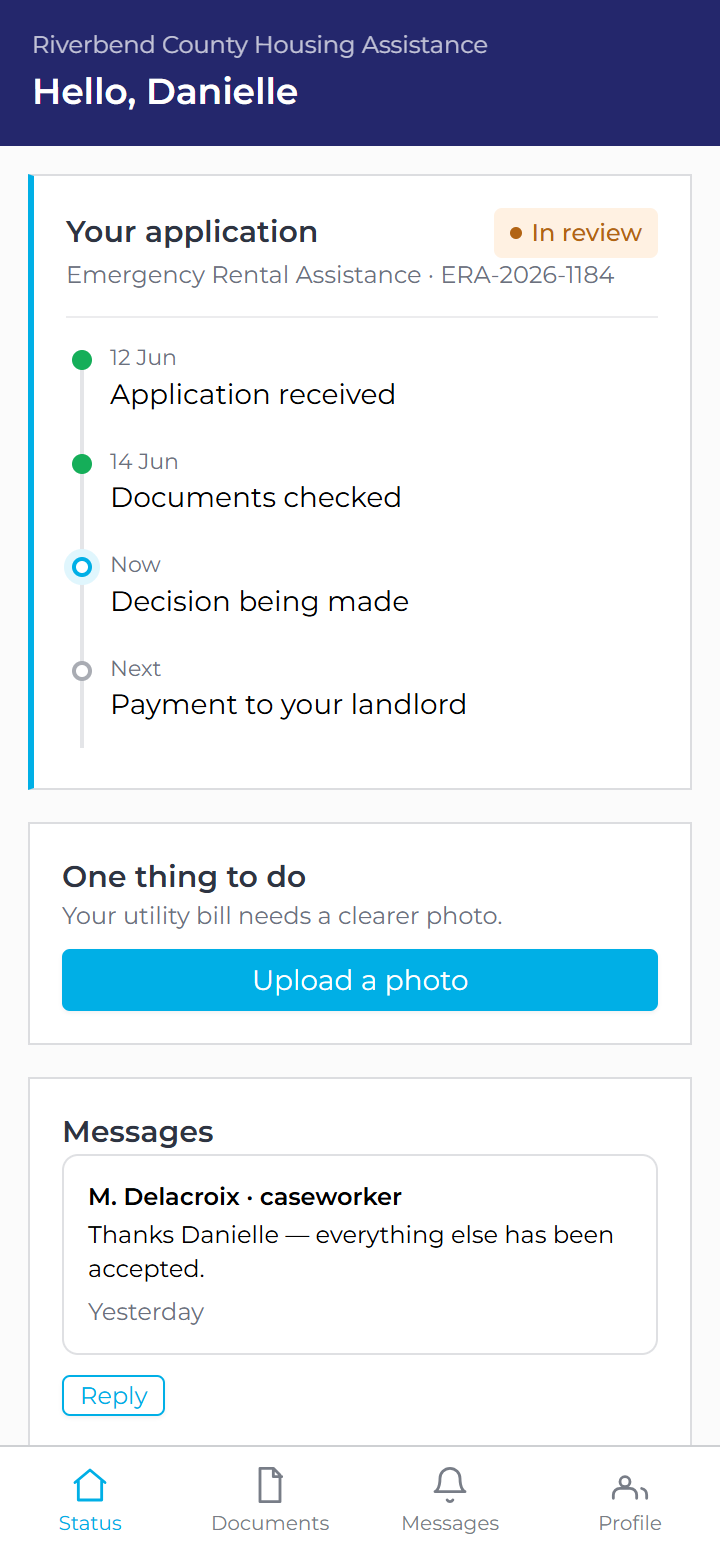
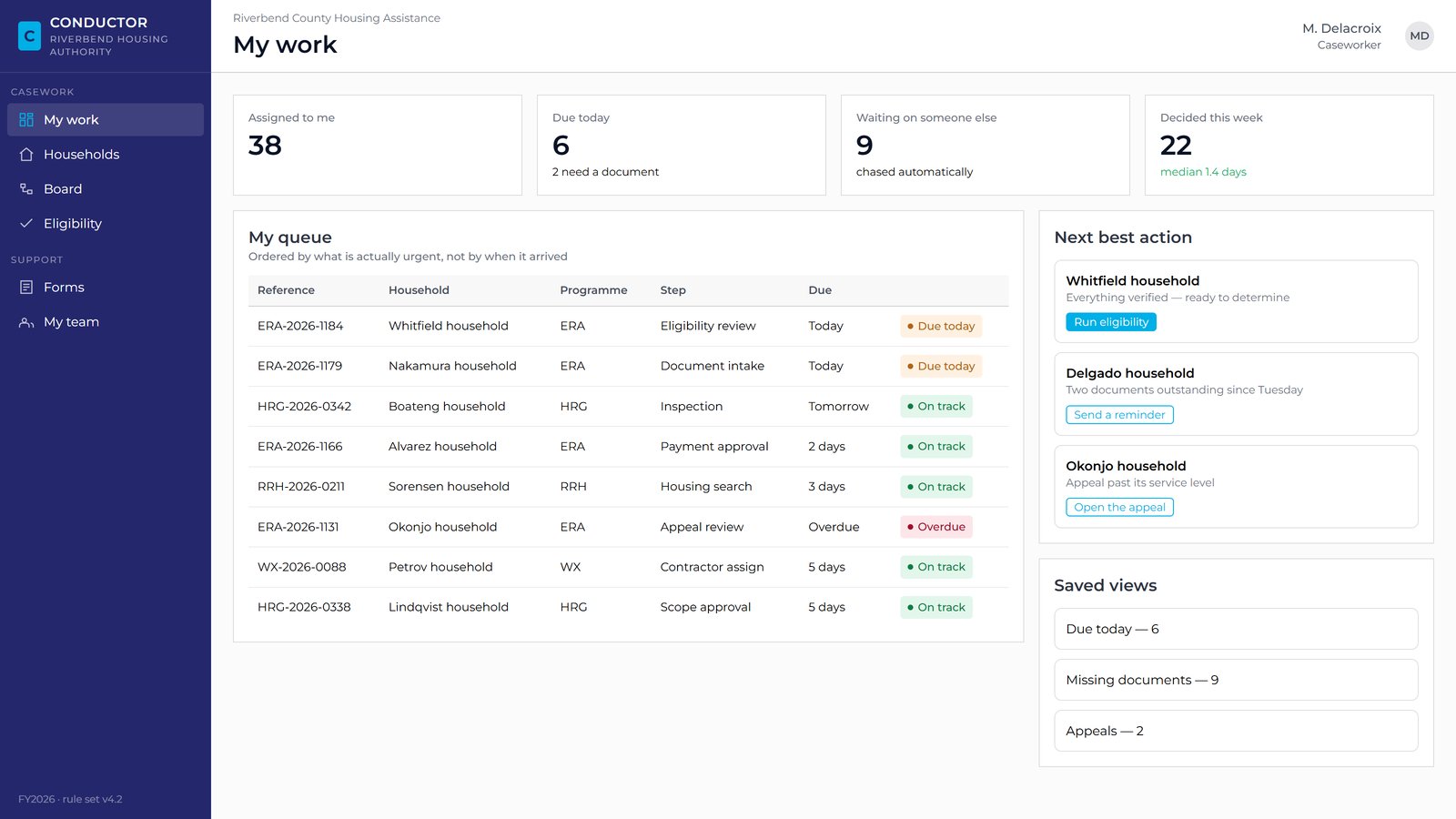
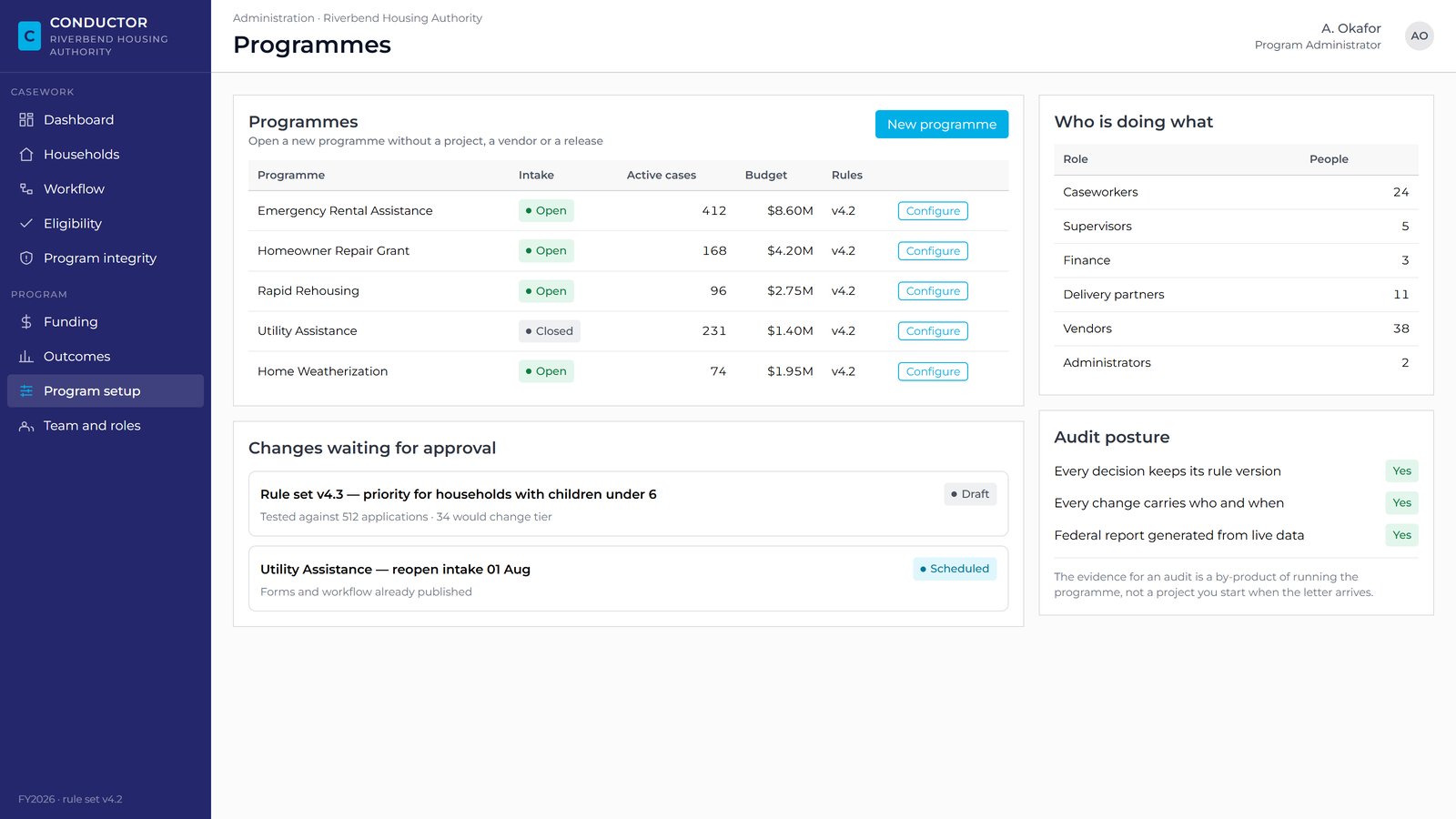
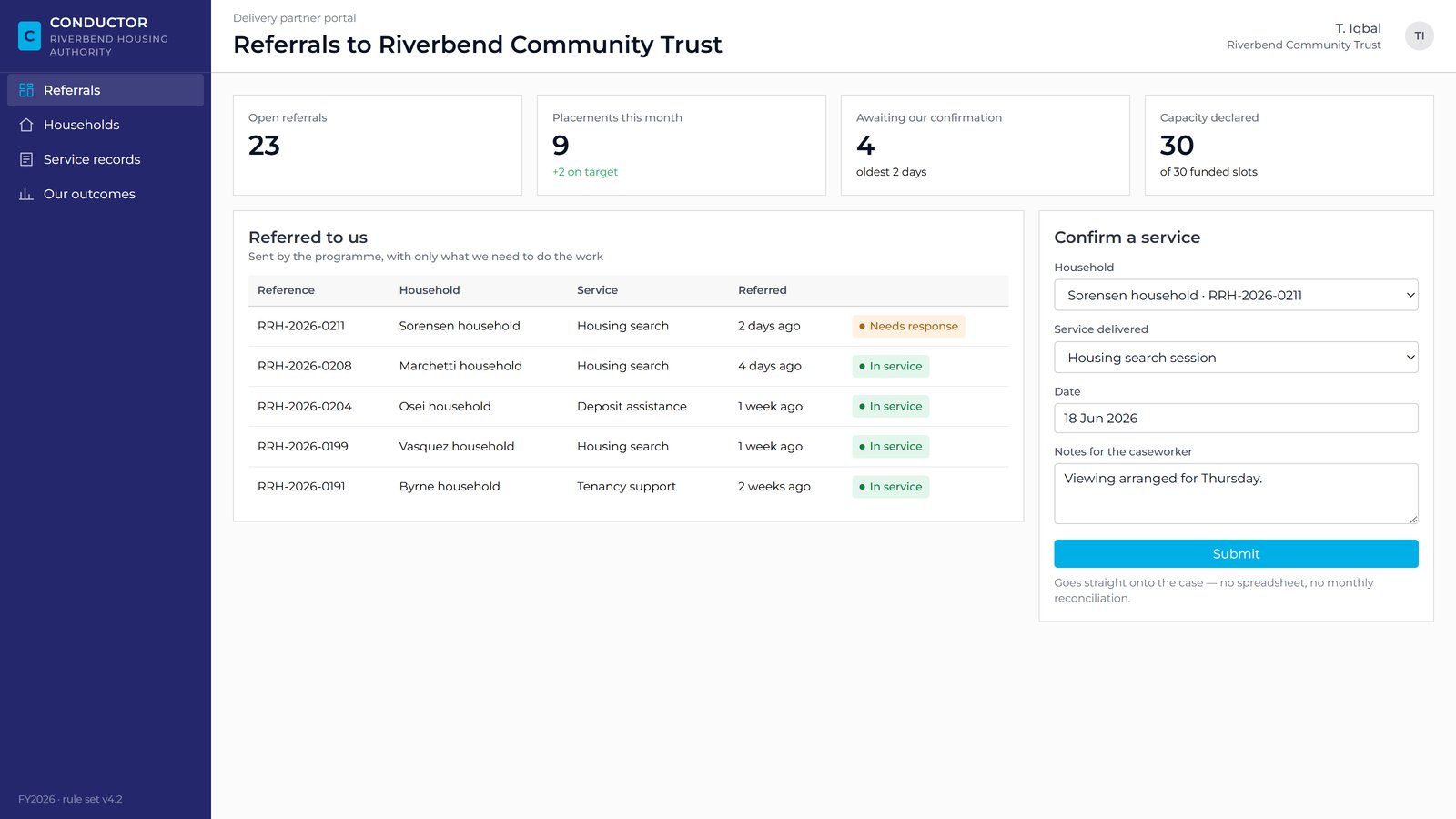
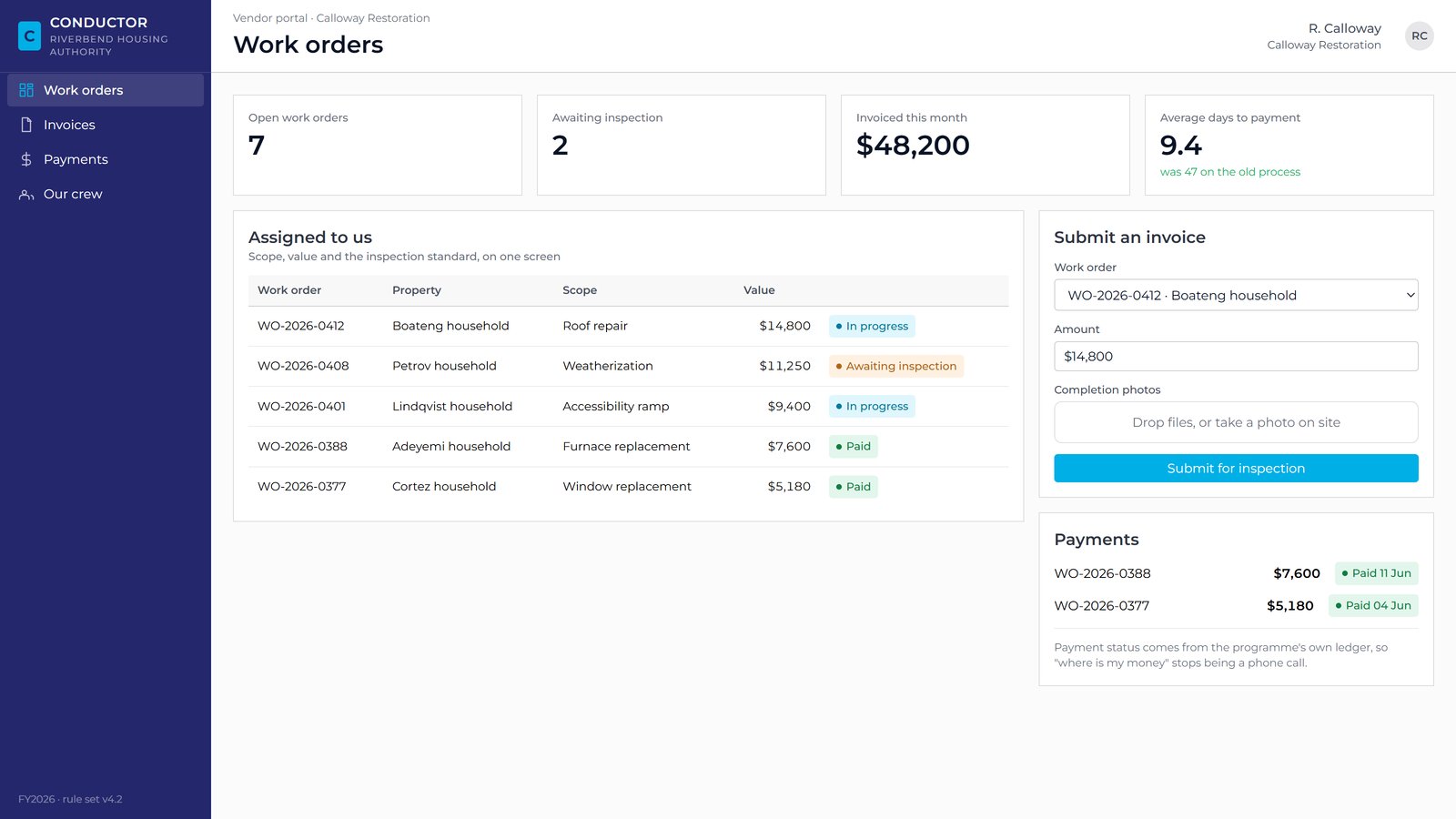
Kinetech configured the platform to Michigan's own eligibility rules, document requirements, agency network and reporting needs, working alongside MSHDA's program team and the Department of Technology Management and Budget. The first program reached production in under 30 days, with residents applying from a phone and applications validated against USPS deliverable address data, then routed automatically to the right local agency. Each agency saw only its own cases, in queues sized to its capacity. Intake, eligibility, casework, documents, fund tracking attributed by source and federal reporting all ran on one record per household, with MSHDA's own team holding the configuration.
The outcomes.
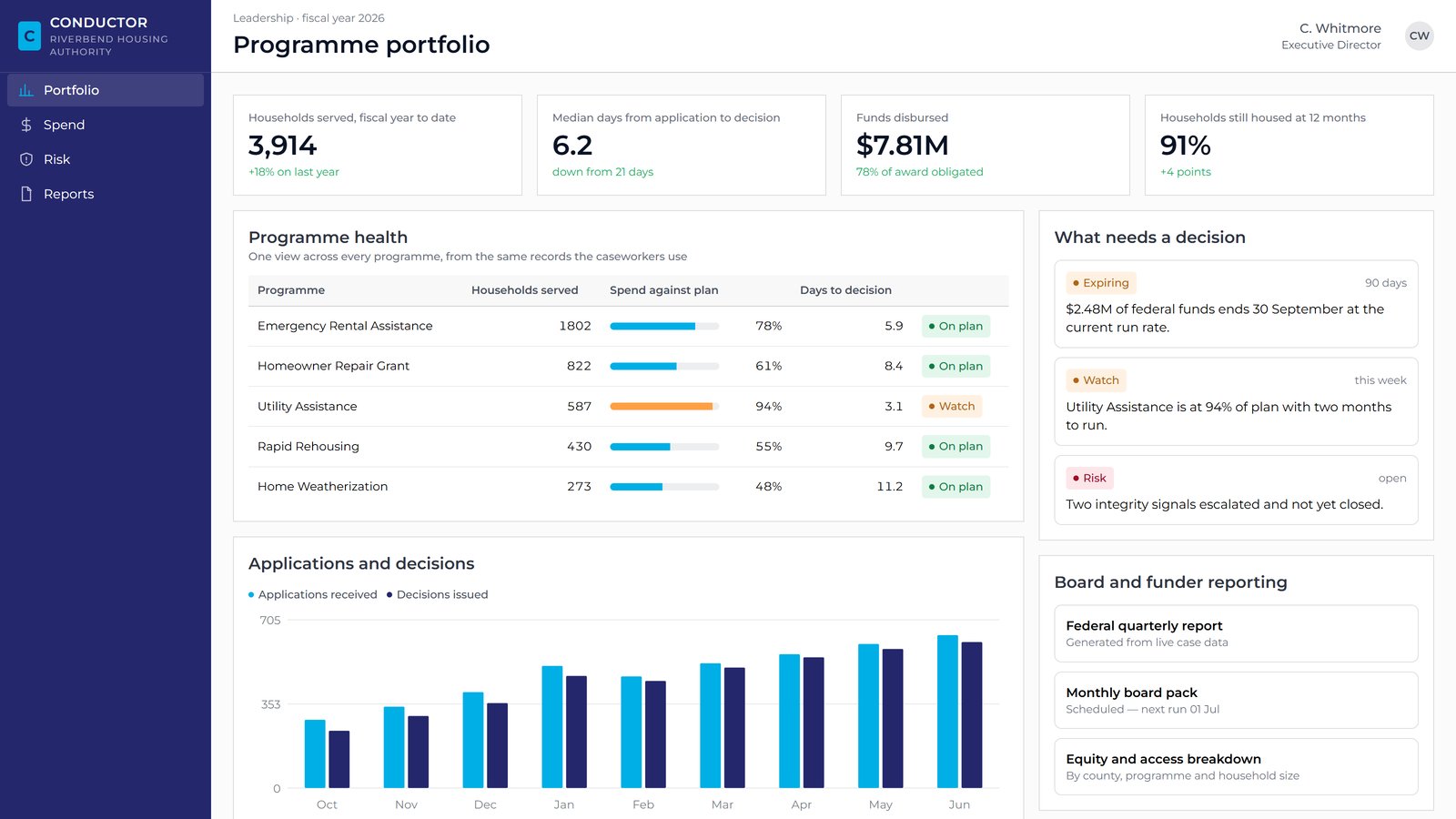
By 2026 more than 500,000 applications have been processed and more than $1.2 billion distributed across multiple federal household assistance programs. Performance on the first program demonstrated the state's execution capacity and earned Michigan an additional $360 million in performance-based federal funding. At peak the platform carried more than 1,300 daily active caseworkers across 80+ local agencies, each seeing only its own work.
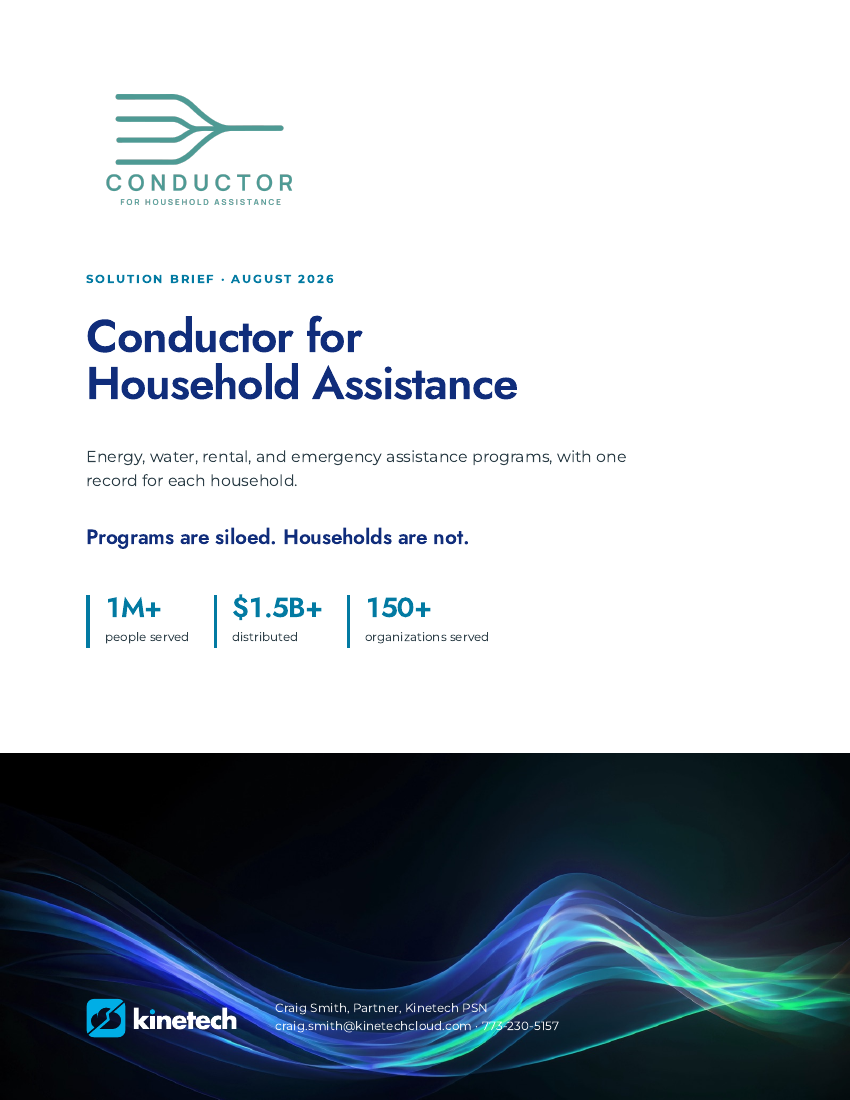
Scope note: The customer story above is one Conductor for Household Assistance deployment. Across all Conductor for Household Assistance deployments at city, county, and state levels, the platform has served 1 million+ people and distributed $1.5 billion+ in household assistance. The customer-specific outcomes shown here are the largest single deployment within that broader scope.
Read the full case study
Going into this, we did a lot of analysis and felt that the only way to do this effectively was with Kinetech and low-code. Ultimately, the results speak for themselves.
Director of IT · Michigan State Housing Development Authority