.png?width=246&height=70&name=Kinetech%20PM%20246%20x%2070%20(1).png)






Steel Manufacturing Company overcomes ERP failure, transforming to digital excellence with Kinetech's agile custom software and system integration solutions. Learn how tech boosts sales and efficiency.
At a Glance
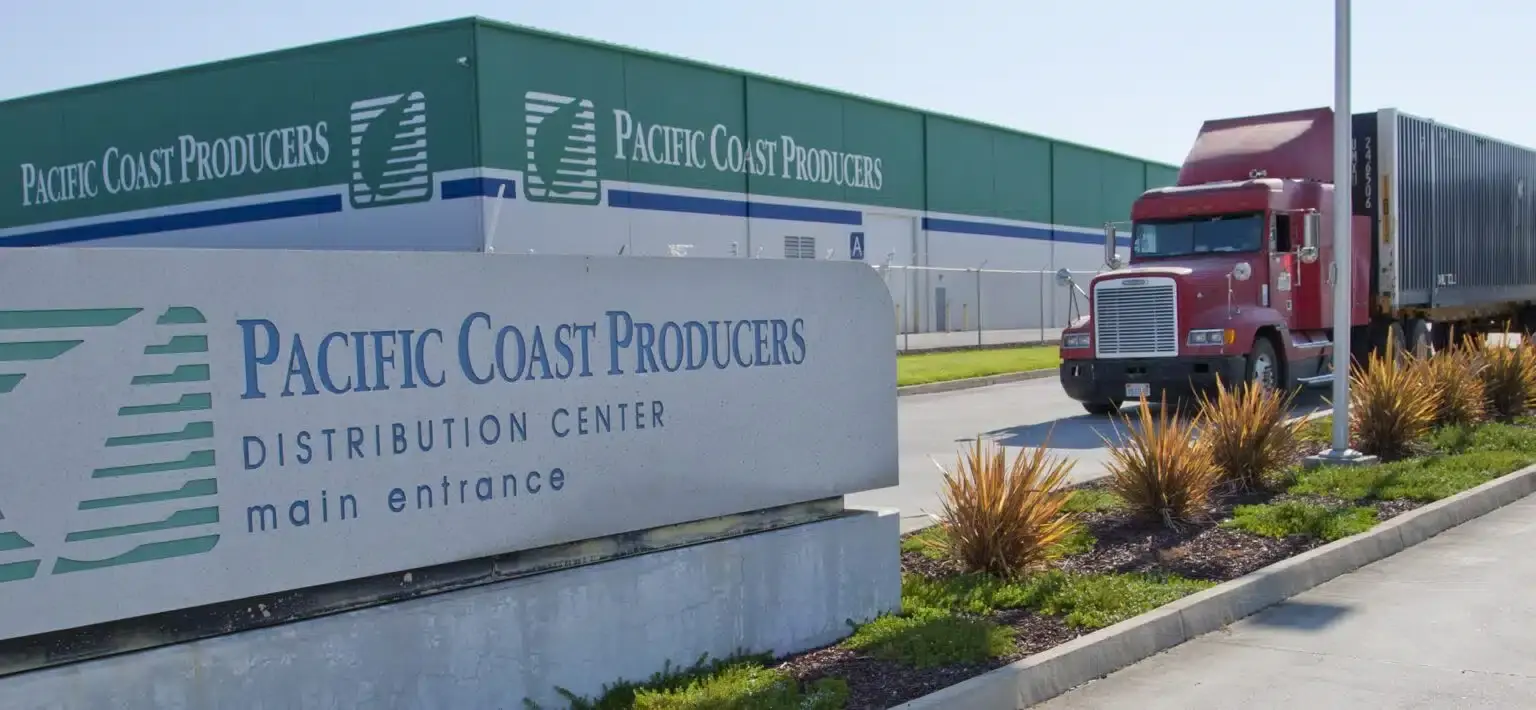
Client: Pacific Coast Producers
Industry: Private-label manufacturing
Size: 800+ unique product SKUs managed across a cross-functional team of campaign managers, sales admins, and QA specialists.
Core Business: National leader in private-label manufacturing, delivering compliant, high-volume product labeling at scale.
Challenge Timeline: A targeted AI-powered modernization of an existing label management application to eliminate manual compliance verification and eliminate the risk of unscalable tribal knowledge.
In private-label manufacturing, a label isn't just packaging—it's a legal contract, a brand promise, and a regulatory requirement all in one. For Pacific Coast Producers (PCP), a national leader in the industry, maintaining label integrity is foundational to their market position.
But as PCP grew to manage over 800 unique product SKUs, they hit a familiar scaling problem: their growth was outpacing their ability to manually verify accuracy. Every label needed review. Every change needed validation. The risk of error was climbing with every new SKU.
They faced a choice: stick with an increasingly risky manual process, or attempt a system overhaul that could disrupt operations.
Instead, they chose a third path. Working with Kinetech, PCP evolved Llima—their custom end-to-end Label Management Application—into an AI-powered compliance engine. By integrating a custom AI-OCR agent, they transformed a manual, opaque process into a data-driven workflow that scales with their business.
This is the story of how they eliminated the invisible ceiling on their growth.

Most manufacturers operate in a state of controlled chaos when it comes to compliance. At PCP, a cross-functional team of campaign managers, sales admins, and QA specialists kept everything running—but the system relied on manual expertise, not digital infrastructure. As volume increased, so did the vulnerability.
The Problem of Tribal Knowledge
Before Llima's modernization, compliance lived in a legacy spreadsheet: over 800 product items, thousands of specific legal claims, and no automation. To verify a single label draft, a QA specialist had to manually cross-reference the artwork against this massive spreadsheet.
The process depended almost entirely on experience and memory—knowing which claims applied to which products and spotting inconsistencies that might slip past someone new to the team. In the industry, this is called "tribal knowledge." It's impressive when it works, but it doesn't scale. When a veteran team member leaves, years of specialized knowledge walk out the door with them.
The Data Visibility Void
Because these claims weren't tracked in a digital database, they existed as "dark data"—inaccessible to anyone who didn't already know where to look. Leadership faced a significant operational blind spot.
Here's the breaking point: if a regulatory body changed the wording for a specific allergen claim, there was no simple way to identify every label in the catalog that used it. It required a manual "search-and-find" mission through hundreds of files.
The risk wasn't a single catastrophic failure. It was the compounding cost of "good enough" processes that could no longer keep pace with modern retail.
PCP and Kinetech have been developing Llima together for years—iterating, refining, and adding capabilities as the business evolved. Because it's a custom application built specifically for their needs, we didn't need to wait for a vendor roadmap or force-fit a third-party solution. When PCP's product line grew and complexity increased, we simply built what was needed next.
That's the power of controlling your own technology fate.
We introduced two critical components: a Centralized Claims Database and an AI-OCR Agent.
The Centralized Claims Database
We migrated 800+ items from fragmented spreadsheets into a structured, relational database integrated directly into Llima. This created a single source of truth. Now, every legal claim, marketing promise, and regulatory symbol is a distinct data point—trackable, updatable, and reportable across the entire organization.
No more hunting through files. No more wondering which version is current.
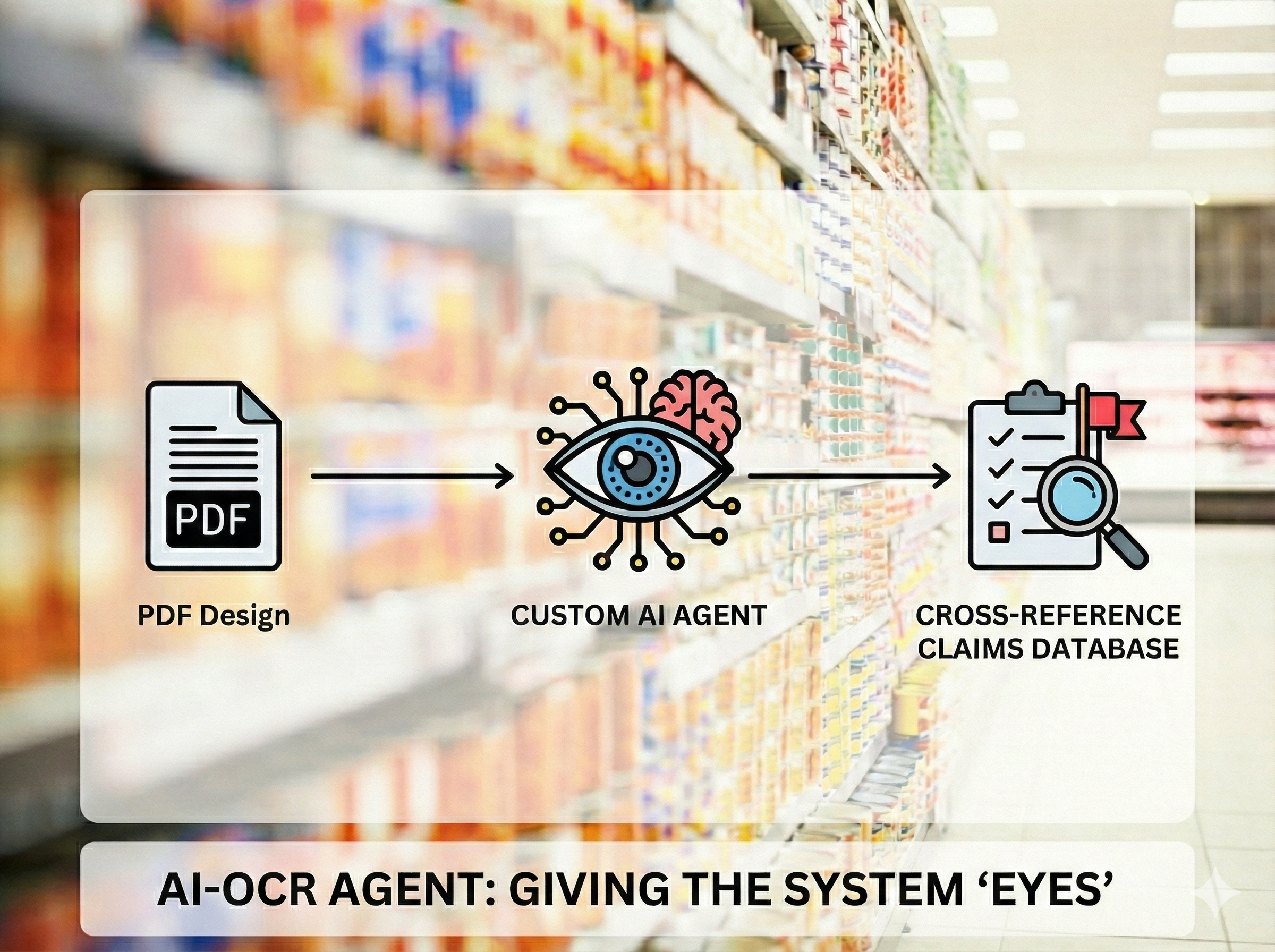
The AI-OCR Agent: Giving the System "Eyes"
The bigger leap was introducing an AI-powered Optical Character Recognition (OCR) agent. In most workflows, a PDF design is "dead data"—you can view it, but the system can't understand what's actually on the label.
Our custom AI agent changed that. It reads label artwork the way a human QA specialist would, but with machine speed and precision. It scans the design, identifies text and images, and cross-references them against the claims database—flagging what's present, what's missing, and what doesn't match.
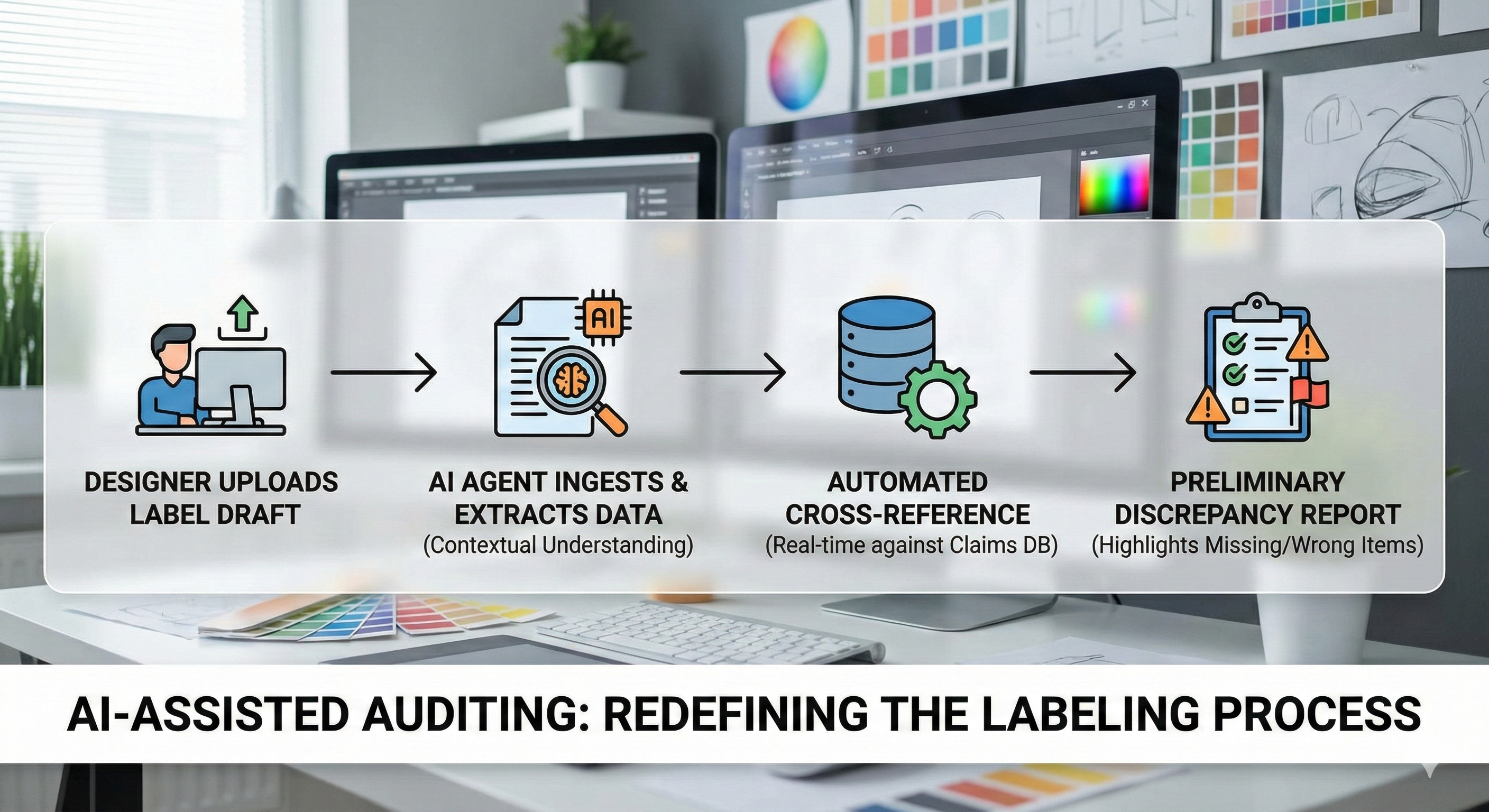
The shift from manual verification to AI-assisted auditing redefined PCP's labeling process. Previously, QA specialists relied on their own knowledge to find and verify claims—a process that was time-consuming, error-prone, and impossible to scale. By integrating an AI-OCR agent directly into Llima, we gave the team a high-speed digital assistant that never forgets a detail.
How it works:
-
The Trigger: When a designer uploads a label draft into Llima, the AI agent ingests the image and prepares it for verification.
-
Contextual Extraction: It doesn't just pull raw text—it understands what it's looking at. It can distinguish between a promotional claim (e.g., "Non-GMO") and a certification symbol (e.g., the Non-GMO Project Verified seal).
-
Automated Cross-Reference: The agent compares the extracted data against the centralized claims database in real time, flagging discrepancies instantly.
The Result:
a preliminary report that highlights what's missing, what's wrong, and what needs attention. The QA team stops searching for data and starts auditing results—ensuring a level of consistency that was previously impossible.

Good technology amplifies expertise—it doesn't replace it. After years of evolving Llima alongside the PCP team, we knew exactly what they needed: a way to scale without losing the rigor that made their QA process best-in-class.
The AI-OCR integration gave them that. It acts as a high-speed digital assistant, surfacing exactly what the human reviewer needs to see—no more, no less. QA specialists no longer spend hours hunting through files and cross-referencing spreadsheets. Instead, they review flagged discrepancies, apply their expertise to edge cases, and make judgment calls the system can't.
This is the "consultant-developer" advantage in action. We didn't build software that dictates how the team should work. We modernized the tool they already trust to remove the noise, so they can focus on what actually requires human judgment
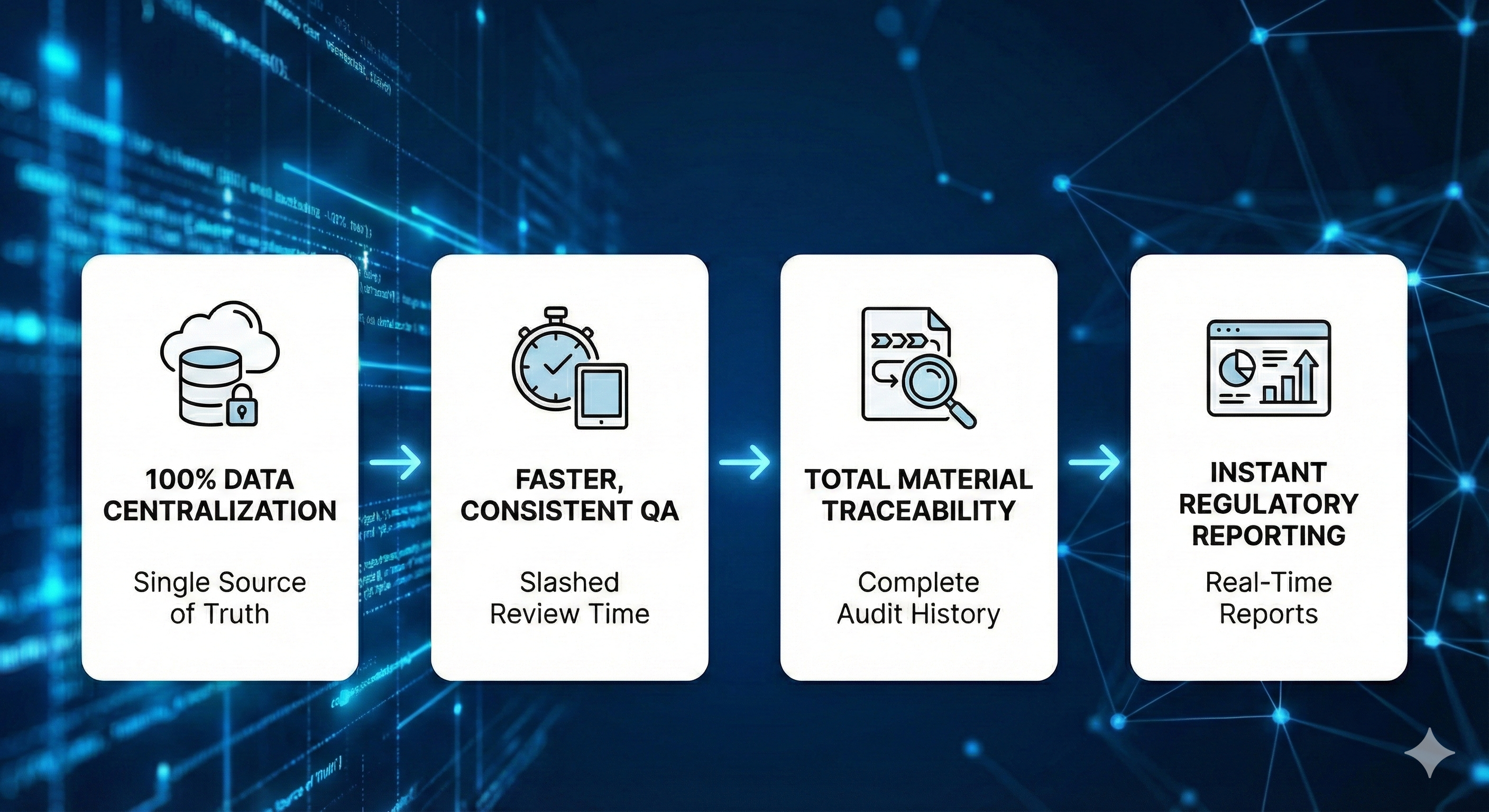
By institutionalizing their compliance knowledge and digitizing the audit process, PCP achieved measurable operational shifts:

The PCP story is a blueprint for sustainable innovation. Instead of ripping out what worked and starting over, PCP and Kinetech took a targeted approach—modernizing the core of Llima where it mattered most, preserving the workflows and institutional knowledge that already delivered results.
This is what a long-term partnership makes possible: evolution without disruption, innovation without risk.
Your Path Forward
Is your technology evolving with your business, or are you patching over problems that will only get worse at scale?
PCP chose continuous modernization over crisis-driven overhauls. They didn't just fix a bottleneck—they built a dependable, AI-powered engine designed to scale with the next decade of growth.
If you're ready to future-proof your operations without starting from scratch, let's talk.

You're likely facing a version of the decision Pacific Coast Producers once faced. You can stick with the status quo—managing through spreadsheets, tribal knowledge, and "good enough" processes—but eventually, you'll hit a ceiling where manual verification can't keep pace with growth.
Or you can choose a different path:
- Software built for your operations, not a one-size-fits-all solution forced to fit.
- Real-time visibility that turns dark data into a strategic asset.
- AI-driven capabilities that empower your team instead of replacing them.
Your Path Forward
The Pacific Coast Producers story proves that even the most complex, manual operations can be transformed without disruption. The key is finding a partner who understands that the best software doesn't force change—it removes friction, so your team can do what they do best, faster and more consistently.
Is your labeling process a competitive advantage, or a compliance risk waiting to happen?
If you're ready to scale without sacrificing control, let's talk.
Ready to transform your manufacturing operations with
software built around your proven processes?